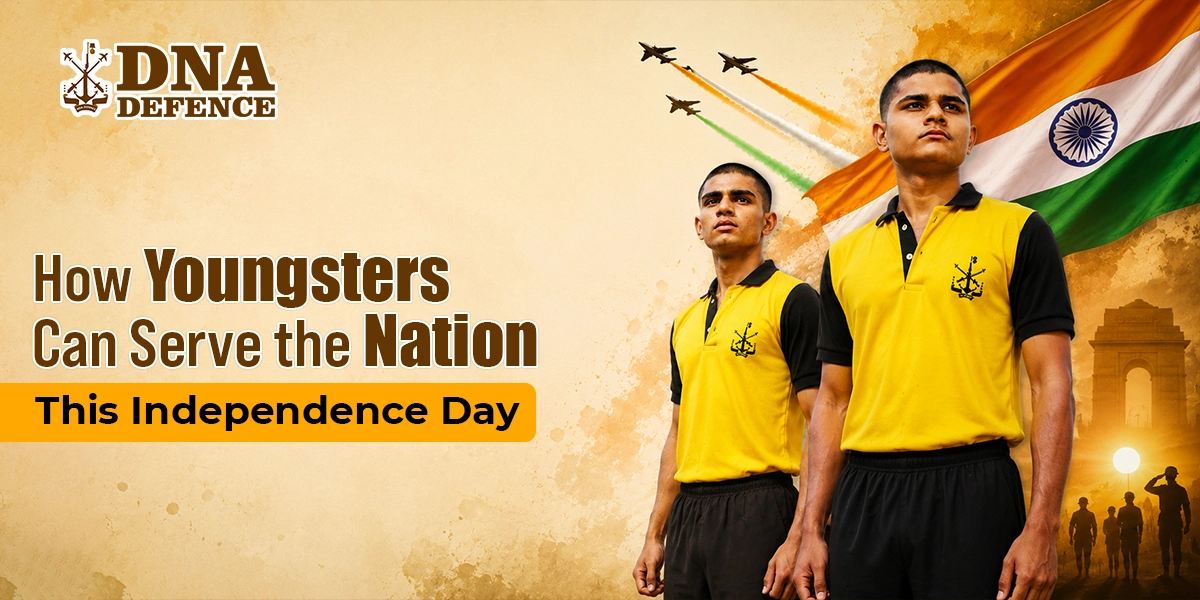
Youngsters can serve the nation by joining the armed forces through exams like NDA, CDS and AFCAT, by volunteering for social and community causes, by choosing careers in public service or simply by being responsible, informed citizens who contribute positively wherever they are. Independence Day is a good reminder that “serving the nation” isn’t limited to one path; it just needs the right intent and a little direction.
Every year around the 15th of August, we hear the same phrases: freedom, sacrifice, patriotism. But somewhere between the flag hoisting and the holiday, a genuine question gets buried — what can a young person today actually do about it? If you’re a student in your late teens or early twenties wondering how you fit into that bigger picture, this one’s for you. There are more ways to answer that question than most people realise and understanding how youngsters can serve the nation is really about knowing your options and picking the one that suits your strengths.
Why This Question Matters More Than Ever
India has one of the youngest populations in the world and that’s not a small detail. It means the next few decades of the country’s growth, security and progress will largely be shaped by people who are currently in school or college. The youth contribution to the nation isn’t some general, abstract idea for the future; it’s already happening through the choices young people make right now, about their careers, their values and how they choose to spend their time.
Joining the Armed Forces: The Most Direct Path
For a lot of young Indians, the most straightforward answer to serving the nation is putting on the uniform. And honestly, there’s a reason this path still holds so much respect: it’s one of the few careers where “service” isn’t just a buzzword; it’s the actual job description.
There are several routes into the forces depending on where you are in your education:
• NDA (National Defence Academy) — for students after 12th grade who want to join the Army, Navy or Air Force through a structured three-year training programme
• CDS (Combined Defence Services) — for graduates aiming to become officers across the three services
• AFCAT (Air Force Common Admission Test) — specifically for Air Force entries, both flying and ground duty branches
• Navy and Airforce Agniveer entries — shorter-duration service options that have opened up newer pathways into the forces
If you’re seriously considering this route, it helps to actually understand what happens after you clear the written exam. The SSB interview process is where a lot of aspirants get caught off guard since it tests personality and leadership far more than textbook knowledge. Similarly, if you’re a graduate weighing your CDS options, choosing the right coaching institute can make a real difference in how prepared you feel walking into that exam hall.
Beyond the Uniform: Other Ways to Contribute
Not every young person wants to or is suited to join the forces and that’s completely fine. Serving the nation shows up in plenty of other forms too:
• Civil services — administrative roles that shape policy and governance at the ground level
• Teaching and education — especially in under-resourced areas where good teachers genuinely change outcomes
• Healthcare and medicine — a field that’s proven, especially in recent years, just how critical it is to national wellbeing
• Social work and NGOs — working directly with communities on issues like education, sanitation or rural development
• Environmental initiatives — tree plantation drives, clean-up campaigns and sustainability projects that protect the country’s natural resources
• Entrepreneurship — building businesses that create jobs and contribute to the economy is its own quiet form of nation-building
Small, Everyday Ways Youngsters Can Serve the Nation
Not everything has to be a career decision. Some of the most meaningful contributions are smaller, more immediate things a student can do on this Independence Day:
• Volunteering for a local blood donation camp or community clean-up drive
• Staying informed about civic issues and voting responsibly once eligible
• Mentoring younger students or helping first-generation learners in your neighbourhood
• Respecting public property and following basic civic discipline which sounds small but adds up at scale
• Standing up against corruption, misinformation or apathy in small, everyday ways
These acts don’t come with a medal or a title but collectively, they shape the kind of society India becomes. Understanding how youngsters can serve the nation really comes down to recognising that patriotism isn’t a once-a-year sentiment tied to a flag; it’s a daily practice.
If the Armed Forces Feel Like the Right Fit
If reading through the defence route above sparked something in you, it’s worth actually exploring it seriously rather than treating it as a distant “someday” plan. The exams are competitive, the physical and written standards are demanding and the SSB stage tests things that can’t really be crammed the night before. This is exactly why structured coaching, disciplined routines and mentorship from people who’ve been through the process matter so much for aspirants starting out. Even something like the Indian Navy recruitment process has enough moving parts that most first-time aspirants benefit from proper guidance rather than figuring it out alone.
Conclusion
Independence Day is as good a moment as any to ask yourself where you fit into the country’s story going forward. Whether that means preparing to join the armed forces, choosing a career in public service, volunteering in your own community or simply being a more responsible, informed citizen, the point is the same: service doesn’t need a grand gesture; it just needs a genuine start.
For those who feel pulled toward wearing the uniform, DNAD (Dehradun National Academy of Defence) has spent over a decade helping young aspirants take that first serious step. As a well-established NDA coaching institute in Dehradun, DNAD prepares students for NDA, CDS, AFCAT, Navy and Airforce entries right from after 10th grade through to post-graduation with a curriculum built around strong academics, SSB-focused personality development and rigorous physical training. The institute’s day-boarding structure, experienced faculty and disciplined daily routine are designed specifically for students who are serious about turning their dream of serving the nation into an actual career. So if the last few sections struck a chord, Independence Day might just be the right moment to take that first step towards the uniform